
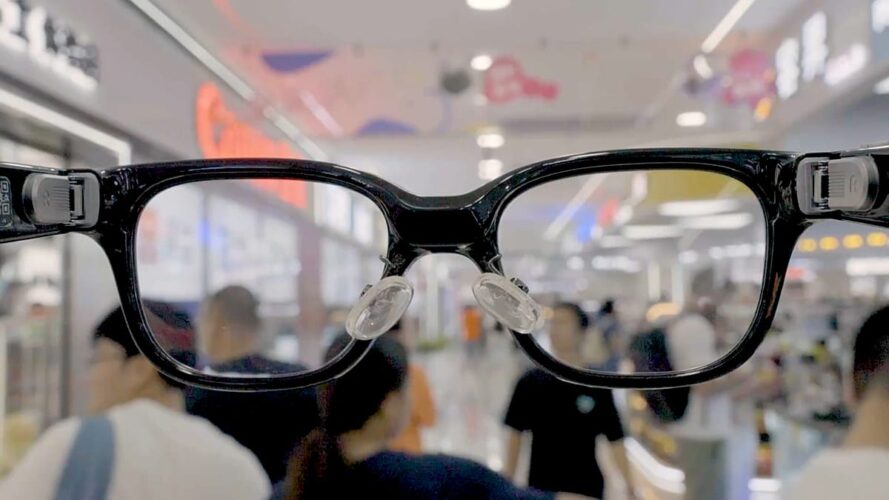
“More than half of the world’s AI glasses are made here in China,” says Yang Zhao, CGTN, at Shenzhen’s Huaqiangbei market, where thousands of visitors try them every day.

For Australian Juanita Neville-Te Rito, who struggled without an interpreter, they offer real-time translation. “We can speak our own words in our own language, it’s amazing!”

For Liu Shanshan, who lost her hearing aged three, RayNeo’s glasses display speech as captions almost in real time. “At a meeting, eating out, or hailing a taxi – I would always wear them,” she says.

Privacy concerns persist, while makers hope to replace smartphones.

About the author

A Euronews journalist since 2001, Denis Loctier has produced short TV documentaries on more than 200 international research projects and covered a variety of other topics, from economy and tourism to international politics and military conflicts.

From 2019 to 2025, as the anchor and producer of “Ocean”, Euronews’ monthly show specialised in the blue economy and marine life, Denis travelled around the world exploring the effects of climate change and human activities on ocean health, talking directly with fishers, business owners, port authorities and policy-makers. “Ocean” has taken Denis and his team to places such as Greenland, the Caribbean Sea, Seychelles, Svalbard, Cabo Verde, Thailand and the Marshall Islands.

Denis holds a PhD in Information and Communication Sciences and is certified to operate in hostile environments. He can also fly paragliders, pilot drones, navigate vessels, and dive to depths of 60 meters.

Follow on social